Convergence 2025 in Miami marked the return of Microsoft’s Convergence conference after more than a decade – a revived, AI + ERP–focused event for the Dynamics 365 ERP community, hosted by Dynamics User Group and sponsored by Microsoft (December 9–12, 2025). Across keynotes, breakouts, roundtables and deep dives, the conference brought together enterprise business and IT leaders, Microsoft product teams, partners and community experts to discuss what “AI-first” really means for ERP – especially through Copilot, data, automation and the shift toward more agentic business applications.

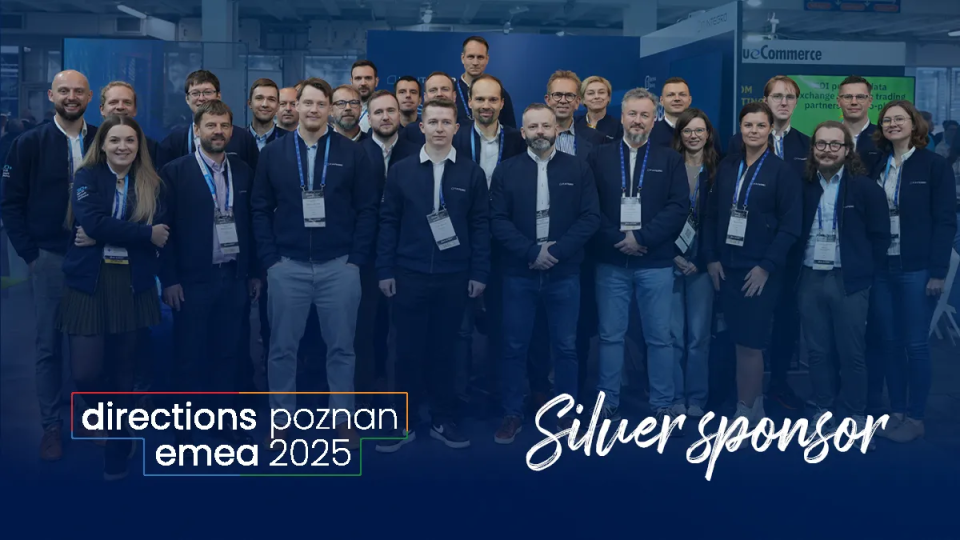
A team from IT.integro attended Convergence 2025 as well, and we came back with plenty of fresh, practical insights – so in this article we’re sharing our notes and the main messages from the keynotes, with a special focus on what matters most for Copilot, Dynamics 365 ERP and the conversations most relevant to Business Central users.

Convergence 2025 Partner Pre-Day in Miami
A team from IT.integro attended the Partner Pre-Day on site, and we came back with a clear takeaway: Microsoft isn’t framing AI as “another feature” anymore – it’s positioning Copilot and agents as a new operating layer for ERP. We’ve distilled the most important messages from the day’s key sessions and demos, with a special focus on what’s most relevant for Dynamics 365, Copilot, and Business Central.
From “ERP in the cloud” to “ERP that works for you”
One of the strongest narrative arcs of the day was how Microsoft describes the evolution of its ERP strategy: from cloud migration to cloud-native architecture, and now to agentic ERP – where AI isn’t sitting on top of workflows but is reshaping how work gets done.
Two lines (repeated more than once) captured that shift clearly: “Every user will have a Copilot, and every process will have an agent.”, and: “What if instead of you working in the ERP system, the ERP system works for you?”.
The point wasn’t “AI will help you write faster notes.” The point was execution: agents that can initiate, complete, and reconcile tasks – while humans stay focused on exceptions, approvals, and outcomes.
The “new stack”: Copilot as UI, agents as execution, knowledge as the fuel
Speakers described a future ERP interaction model with three practical layers:
- Copilot as the interaction layer: natural language becomes the front door (instead of jumping between forms, pages, and rigid navigation).
- Agents as the execution layer: agents run workflows, handle exceptions, and automate actions across systems.
- Knowledge over raw data: AI turns structured and unstructured information into “reasoning-ready” outputs, not just reports.
This is where the “AI + ERP” story stopped being abstract. The message at Convergence 2025 was: if ERP stays UI-heavy and workflow-hardcoded, it will bottleneck the business. If ERP becomes composable and agent-ready, it becomes a platform for continuous automation.
MCP and “open ERP”: why Microsoft keeps talking about protocols
A major technical theme (presented in partner-friendly language) was MCP (Model Context Protocol) – an “open protocol” approach that Microsoft is using to let agents securely interact with enterprise systems through standardized tools.
Microsoft’s own positioning is that MCP servers expose ERP system capabilities as tools agents can use, so partners and customers can build agents that don’t just answer questions – but actually do work in the system.

This was framed as a partner unlock, because:
- third-party agents (built by partners) can operate with governed access,
- agents can be orchestrated across systems (not only inside ERP),
- and extensibility becomes more “capability-driven” than “screen-driven.”
Microsoft has also described this direction publicly in its Dynamics ecosystem messaging around MCP.
Copilot + agents: the scale is already massive
Microsoft backed the strategy with adoption numbers that matter for partners – because they signal where budgets, incentives, and customer expectations are heading.

From Microsoft’s FY2026 Q1 earnings call, Satya Nadella stated that Microsoft now has:
- 900 million monthly active users of AI features across its products, and
- 150 million monthly active users across its first-party “family of Copilots.”
On the “agent creation” side, Microsoft has reported:
- 230,000+ organizations using Copilot Studio (including 90% of the Fortune 500).
- Over 1 million custom agents created in a single quarter across SharePoint and Copilot Studio (a 130% quarter-over-quarter increase, per Microsoft).
- A forecast (cited by Microsoft from IDC) that 1.3 billion AI agents will be deployed by 2028.
Separately, Microsoft’s Work Trend Index has been building the business case for “digital labor” by pointing to a capacity gap: 53% of leaders say productivity must increase, while 80% of the global workforce say they lack enough time or energy to do their work.
Put simply: Microsoft is telling the market that agents aren’t a future concept – they’re already scaling, and ERP needs to be ready.

What Microsoft asked partners to do next
Beyond vision, the Partner Pre-Day at Convergence 2025 was heavy on practical partner direction:
Start with what exists, not what’s “perfect”
A consistent call-to-action was to deploy what Microsoft has already shipped, learn the change-management patterns, and build credibility inside customer organizations—before trying to “replace entire processes with agents” in one jump.
Build your own agents – and build them where customers feel pain
The most partner-relevant moment was the push toward an ecosystem of third-party agents connected to Dynamics, supported by Microsoft business development and go-to-market motions (shared during the Partner Pre-Day).
Prepare for a new delivery model
Speakers emphasized that building agents is different from traditional software delivery: more experimentation, more evaluation, more governance, and clearer business metrics. The subtext was clear: partners who master this will lead the next ERP cycle.
What this means for Business Central partners (and our focus at IT.integro)
Even though parts of the Partner Pre-Day at Ccnvergence 2025 conference were designed for broader “Dynamics ERP partner” strategy, the themes translate directly to Business Central:
- Copilot becomes the natural place to start customer conversations – because it’s increasingly presented as the UI layer for agentic work.
- Agents become the monetizable unit of value: scoped, repeatable solutions that automate real work across finance, sales, purchasing, and operations – without forcing customers into multi-year “big bang” change.
- Extensibility shifts from “custom pages and fields” toward “custom capabilities” (agents + tools + governed access).
Convergence 2025 Day 1 Keynotes: Why Microsoft Says the Future of Business Apps Is “Agentic”
Convergence returned to the Dynamics community with a clear headline for day 1: Microsoft isn’t treating AI as an add-on. Instead, it’s positioning Copilot + agents as a new operating layer for business applications – one where software doesn’t just support work, but increasingly does work.
The agentic shift: from “features” to “work getting done”
Satish Thomas framed the moment as a broad transformation in how people interact with business systems: not forms-first and menu-driven, but intent-first – where users describe outcomes and agents execute steps.
A key promise repeated through the keynote was the goal of making Dynamics 365 “agent-ready” so customers can move from assisted productivity to more autonomous, end-to-end processes.
Market reality check: the agent explosion is not hypothetical
The keynote anchored the “agentic” narrative in a market forecast and Microsoft’s own adoption signals:
- Microsoft cites an IDC prediction that there will be 1.3 billion AI agents by 2028;
- Microsoft also reports that Copilot Studio has been used by more than 230,000 organizations, including 90% of the Fortune 500, to build agents and automations.

Satish Thomas also referenced external recognition of Microsoft’s momentum in agents; VentureBeat, for example, has argued Microsoft has assembled the largest AI agent ecosystem to date.
The platform angle: “agent-ready” only works if the ecosystem can extend it
A big theme at Convergence conference 2025 (and a very partner-relevant one) was that Microsoft views itself as a platform company, and that the long-term differentiator will be what partners and customers build on top of the core apps – especially as agents multiply and become more specialized.
This matters because the “there’s an agent for that” future only becomes real if the ecosystem can create agents safely, govern them, and connect them to real business actions.

MCP as the connector layer for agents in business apps
To make “agentic business applications” practical, Microsoft highlighted Model Context Protocol (MCP) servers as governed bridges between agents and line-of-business systems. In Microsoft’s own wording, MCP servers connect agents (built in tools like Copilot Studio) with business data and actions in Dynamics 365 and Power Platform.
Microsoft has also described the Dynamics 365 ERP MCP server’s evolution from a static toolset to a dynamic, configurable framework – intended to unlock hundreds of thousands of ERP functions for secure, real-time agent use.
Business Central spotlight: momentum + “agents in the product, available now”
In Mike Morton’s Business Central keynote at Convergence 2025, the framing was straightforward: Microsoft Dynamics 365 Business Central is Microsoft’s ERP for small and midsize businesses, designed as an “all-in-one” suite across finance and operations. Microsoft also highlights the scale of the product today, noting Business Central is trusted by 50,000 companies.


To illustrate how diverse “SMB ERP” can be in practice, Morton shared three examples from the Business Central customer landscape: a classic mid-market deployment (Sapphire Oil & Gas), a multi-tier ERP pattern where a large enterprise uses Business Central in subsidiaries or franchise networks (Michelin), and a fast-growing product company (Nanoleaf) that chose Business Central early and continued to grow on it. He also pointed to Business Central’s broad geographic reach through Microsoft and partner localizations (Microsoft publishes a living list of availability by country/region).

Payables Agent in Business Central: AP automation with review-first control
One of the keynote demo showed the Payables Agent as a mailbox-driven automation: it monitors incoming vendor invoices, uses AI to extract and interpret invoice details, and creates draft purchase invoices for review before posting/approval. This “draft-first” pattern is central to building trust and keeping humans in control.
In other words: less time retyping invoices, more time validating exceptions.
Sales Order Agent in Business Central: turning emails (and attachments) into quotes/orders
Another Business Central agent demo focused on the “messy reality” of sales intake: customers emailing unstructured requests or sending PDFs. Microsoft’s documentation describes Sales Order Agent as automating sales quotes and orders from customer inquiries received via email, with steps for review/confirmation.
Mike Morton also emphasized why these demos can feel “boring”: the real work is covering the edge cases (availability, substitutions, alternate warehouses, changing requirements, multilingual requests) – so the process is automated end-to-end, not just one small step.
What to take away from Convergence 2025 Day 1
Across both keynotes, the practical message for partners and customers was consistent:
- Agents are becoming the delivery unit of value (not just features in a release wave).
- Business Central is getting agent experiences inside core processes (AP and sales intake are early examples).
- MCP is Microsoft’s bet on making those agents extensible, governed, and scalable across the ecosystem.
Convergence 2025 Day 2 Keynotes: From “Intelligence on Tap” to Scalable Agent Governance
Day 2 at Convergence 2025 focused on a practical question many organizations are now asking: how do you move from experimenting with AI to running real business processes with agents – safely, measurably, and at scale?

“Intelligence on tap” and the rise of frontier firms
In keynote, Brian Good (Microsoft) framed the current shift as “intelligence on tap” – with AI becoming abundant and on-demand rather than scarce. He described “frontier firms” as organizations putting AI and agents at the center of how they operate, and pointed to three recurring patterns of adoption: giving employees an AI assistant, automating processes with agents, and redesigning functions “from first principles.”

To help leaders choose where to start, he suggested an “onion” approach: pick a function, identify the process within it, then define the business metric that matters (examples mentioned included revenue per seller, conversion rate, cost, inventory turns, and customer satisfaction). He also shared internal Microsoft examples presented on stage (e.g., improvements in revenue per seller, conversion rate, and cost reduction) as illustrations of what “metric-first” AI rollouts can look like.
Learning from customer “magic moments” and measurable outcomes
A panel with customers brought the strategy down to earth:
- Lifetime Products described using agents and automation to remove repetitive work and then “rebalance” people into higher-value roles – presented as a partnership between IT and HR (with HR owning upskilling and governance).
- Infinite Electronics emphasized “voice of the customer” analysis and operational speed (especially around order processing and availability), sharing concrete operational metrics and budget impact described during the session.
- Nestlé discussed using Dynamics in parts of its M&A practice and highlighted familiar transformation challenges – change management, data migration, and integration – paired with the idea that AI can help simplify and speed work once the process foundations are in place.
A memorable call-to-action repeated across the day was simply: “Just start.”
From agent usage to agent strategy: what Microsoft’s research is signaling
The keynotes echoed broader market signals that agent adoption is accelerating. Microsoft’s Work Trend Index 2025 describes 2025 as “the year the Frontier Firm is born,” noting growing expectations that agents will become embedded in daily work and business workflows.
Microsoft also points to IDC’s forecast that there will be 1.3 billion AI agents by 2028, reinforcing why governance and operational control is becoming a board-level topic rather than a niche IT concern.

Closing keynote: Copilot Studio as the build-and-run layer for agents
The closing keynote at the Convergence 2025 conference (Copilot Studio leadership) zoomed in on the agent-building lifecycle – from quick productivity wins to more autonomous, process-running agents – and stressed that “agents aren’t one-size-fits-all.” The talk also emphasized that successful deployments blend machine scale with human strengths like judgment, empathy, and trust-building.
A few product and platform themes stood out:
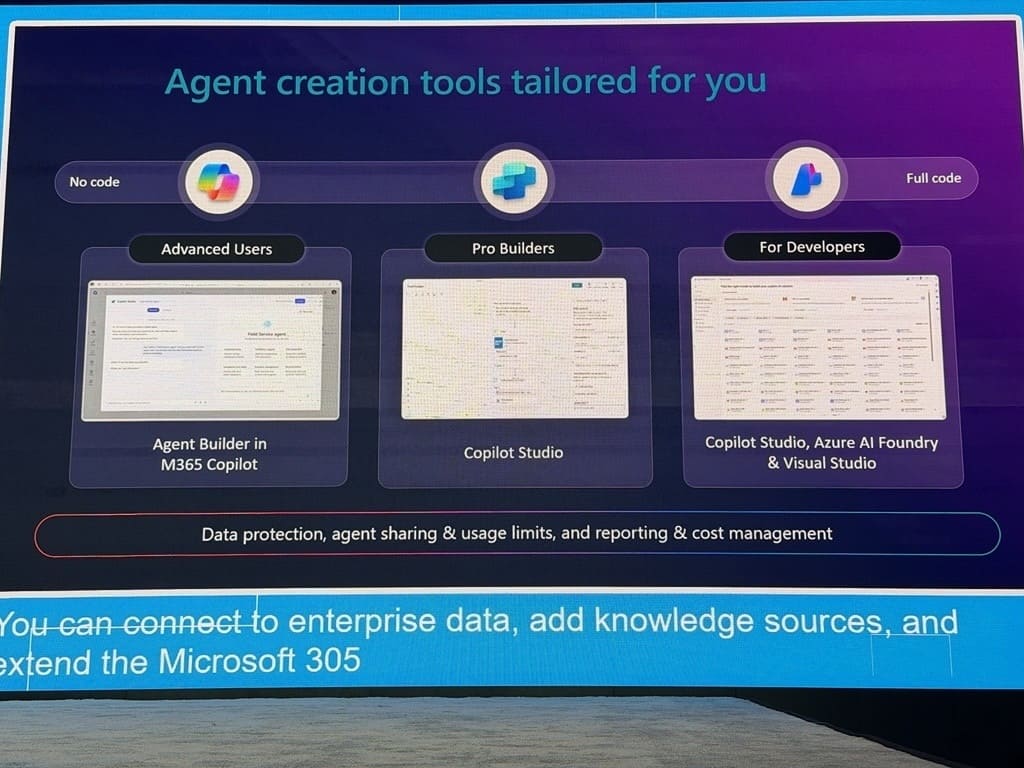
- Copilot Studio as a multi-builder platform: positioned to support everyone from low-code builders to pro-code developers (with integration paths into Azure AI tooling).
- Governance as a first-class requirement: Microsoft highlighted the need for centralized oversight as organizations scale from “one agent” to “many agents.”
Microsoft introduced Agent 365 as a centralized “control plane” concept for registering, managing, and governing agents across Microsoft 365, Dynamics 365, and Power Platform – an answer to the operational question: how do we keep agents auditable, secure, and controlled as they proliferate?
Proof points and customer stories: T-Mobile and beyond
To underline real-world traction, Microsoft has publicly stated that more than 230,000 organizations (including 90% of the Fortune 500) use Copilot Studio to create and customize agents.
One example often highlighted is T-Mobile, where Copilot Studio was used to build agent experiences that help frontline teams get answers faster and improve customer conversations.
ROI, but with discipline: why “value” and “governance” are paired
Alongside the optimism, the message across Day 2 was: outcomes matter. Microsoft referenced IDC research on ROI to encourage organizations to move beyond pilots and measure impact. IDC’s study shows organizations reporting strong returns (often framed as “nearly 4x” in Microsoft’s messaging).
What Day 2 leaves partners and customers with
Across both keynotes, the core idea was consistent: agents are moving from demos into operating models. The winners won’t be those with the most experiments – but those who can pick a process, tie it to a metric, deploy with adoption and change management, and scale with governance.
Convergence 2025 Takeaway: From “AI Features” to an Agentic Operating Model
Convergence 2025 in Miami made one message unmistakable: we’ve moved past “AI as a feature” and into AI as an operating model for business applications. Across the Partner Pre-Day and both conference days, Microsoft consistently positioned Copilot as the new interaction layer and agents as the execution layer – moving from productivity support to process automation and, ultimately, human-led, agent-operated work. The customer stories reinforced that this shift is already delivering measurable impact when organizations start with a clear process, define the right metric, and pair technology with change management. For Microsoft Dynamics partners and customers – especially in the Business Central ecosystem – the takeaway is practical: start small, prove value fast, and build the governance and skills to scale, because the agentic era isn’t coming “someday” – it’s already here.